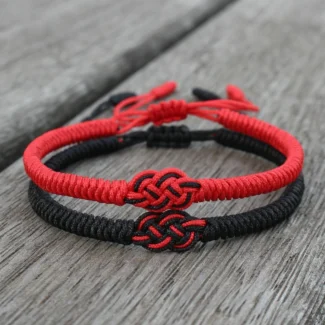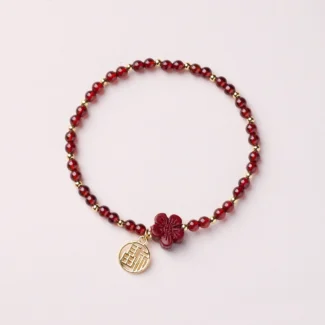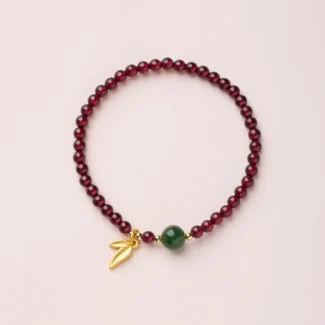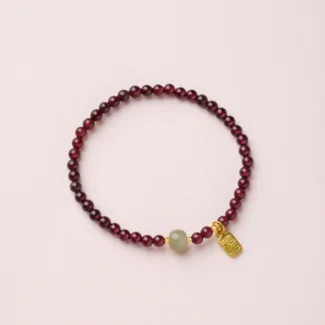


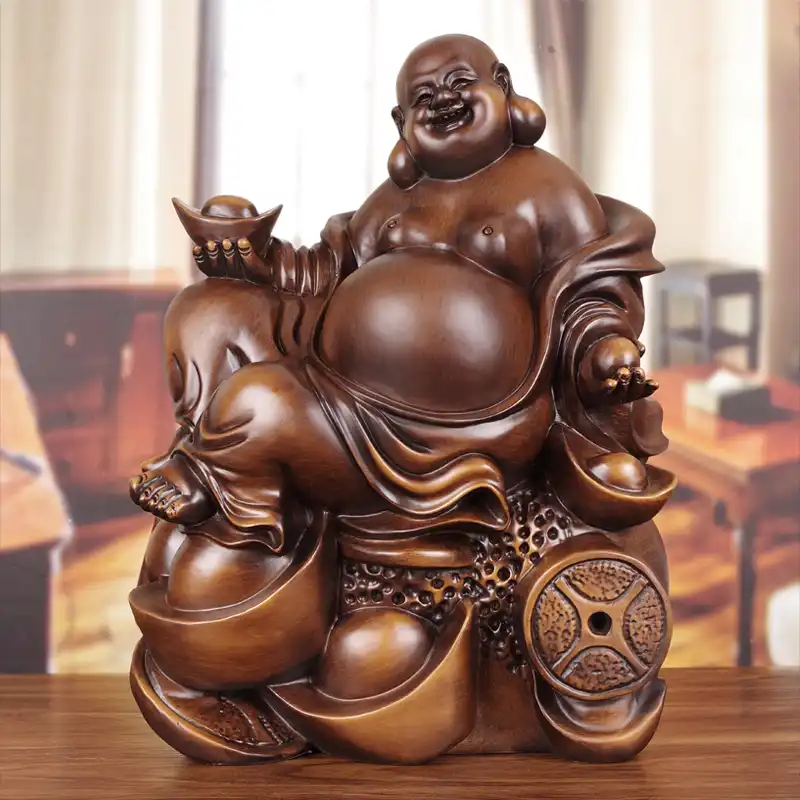

Huanghuali for Focus and Mindfulness during Meditation is a practice that uses the rare wood of the Dalbergia odorifera tree to ground the spirit and sharpen the mind. Many seekers look for this wood because its unique physical properties, like its rich scent and dense weight, act as a bridge between a busy daily life and a calm inner world. By using these sacred tools, we can find a deeper sense of presence and clarity in our sessions.
- Huanghuali provides a sensory anchor through its spicy scent and solid weight.
- Visual grain patterns help practitioners maintain one-pointed concentration.
- The wood is historically linked to imperial scholars and spiritual seekers.
- It balances the Root Chakra to reduce anxiety and scattered thoughts.
- Regular use creates a tactile reminder to stay in the present moment.
What Is Huanghuali for Focus and Mindfulness during Meditation?
Huanghuali is a legendary rosewood that has been a part of spiritual traditions for centuries. We often refer to it as the “Queen of Woods” because of its rare beauty and the steady energy it brings to any space. In the world of Crystal Meanings, woods like this are valued just as much as gems for their ability to hold a specific frequency.
The Scientific and Spiritual Definition
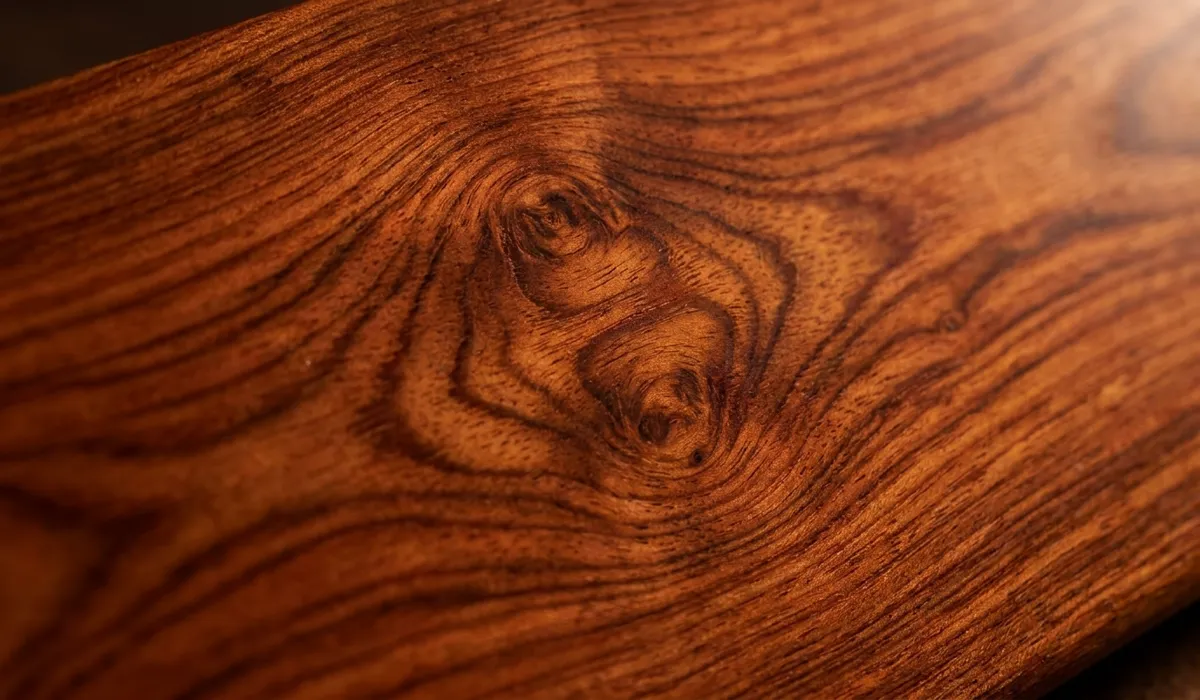
Scientifically, this wood comes from the Dalbergia odorifera tree, a slow-growing species that produces an incredibly dense heartwood. In traditional circles, it is called the “Yellow Flowering Pear,” prized for its oily texture and lasting fragrance. When we talk about focus, we are referring to how the wood’s density keeps the practitioner feeling physically “heavy” and seated during practice.
Origin and Rarity of the Material
The most famous variety is the Hainan Rosewood, which comes from a specific island in China. Historically, this wood was so rare that it was kept only for the imperial family and the highest scholars. Because it takes hundreds of years to grow, the wood carries a sense of ancient time and endurance that helps us slow down our own racing thoughts.
Video source:YouTube
Author:Chinese Antiques
Original video link:https://www.youtube.com/watch?v=7blluK3XL80
Spiritual Meaning & Symbolism
The spiritual meaning of this wood is tied to the idea of balance and the “Middle Way.” It is strong enough to last for centuries, yet it feels soft and smooth once it is polished. This teaches us that true strength comes from a flexible and calm mind, rather than a rigid one.
Grounding the Root Chakra
We find that Huanghuali is one of the best materials for working with the Root Chakra (Muladhara). When you feel anxious or your mind is jumping from one worry to another, the heavy energy of this wood pulls you back to the earth. It creates a foundation of safety so that you can dive deeper into your inner self without fear.
Connections to the Heart and Third Eye
The wood also has a sweet, rose-like undertone that opens the Heart Chakra (Anahata), encouraging kindness toward oneself during practice. Meanwhile, the complex “ghost face” patterns can stimulate the Third Eye Chakra (Ajna). These visual details help focus the imagination, preventing the mind from drifting into unproductive daydreams during long sits.
Benefits of Using Huanghuali for Focus
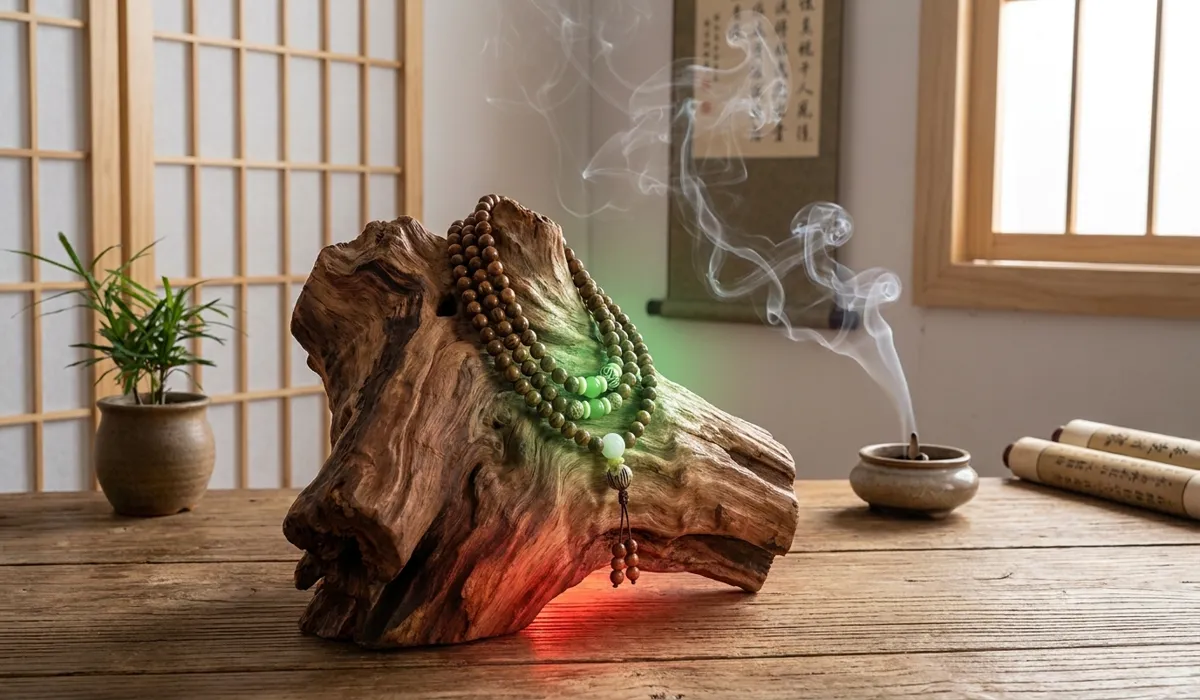
Using Huanghuali for Focus and Mindfulness during Meditation offers several practical benefits for both beginners and experts. The wood acts as a “sensory anchor,” which is a physical object that helps your brain realize it is time to be quiet and still. According to records on Wikipedia, the oil content is what gives the wood its famous therapeutic scent.
Cultivating Stability and Ding
In Eastern philosophy, the concept of “Ding” (stability) is essential for progress. By holding a piece of this rosewood, you can feel its weight in your palms, which makes it easier to keep your body still. This physical stillness eventually leads to mental stillness, allowing you to reach states of deep peace much faster.
Visual and Tactile Anchoring
The “ghost face” patterns in the grain act as a focal point for the eyes, a practice known as a dristi. Instead of letting your eyes wander around the room, you can rest your gaze on the swirling knots of the wood. This simple act of looking at something natural and complex can quiet the “monkey mind” that seeks constant distraction.
How to Wear and Use Your Beads
How you wear your beads can change the way you interact with their energy. Many people like to keep them on their person throughout the day as a tactile reminder to breathe. If you are preparing for the future, you might want to consider Meditations And Mantras to pair with your new tool.
Left vs Right Hand Logic
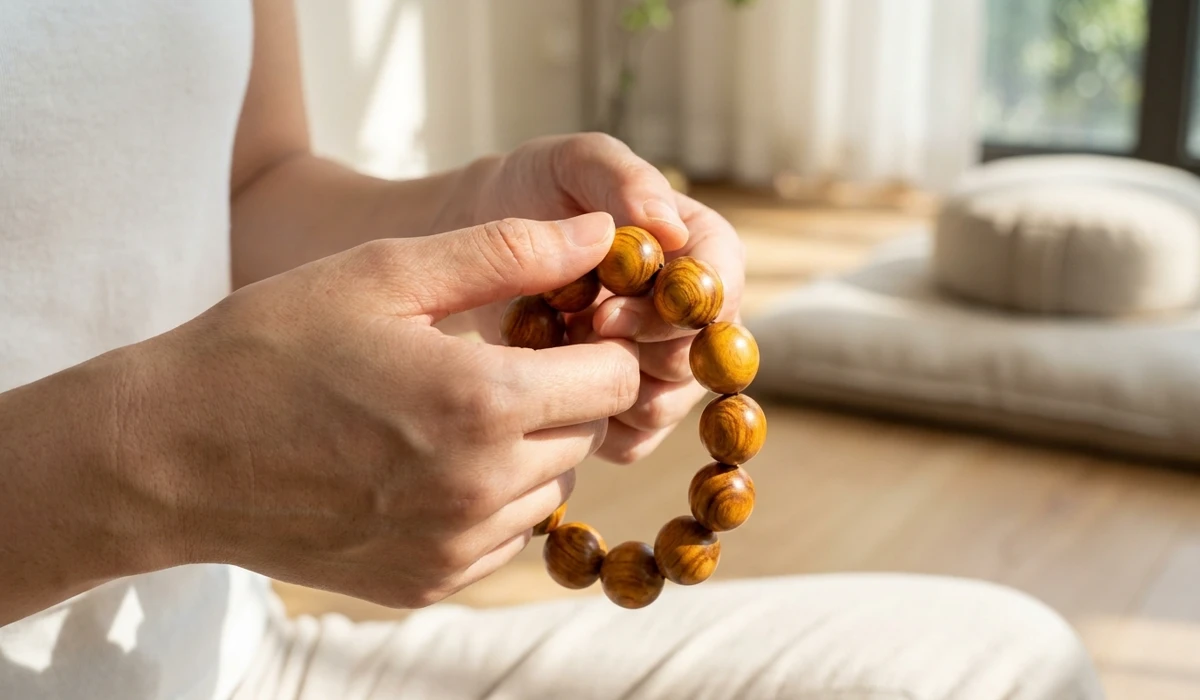
In traditional practices, we suggest wearing the beads on the left hand if you want to receive energy. The left side is the “receiving” side, perfect for absorbing the calming and grounding vibrations of the wood. If you are a teacher or want to project peace into a room, you might wear them on the right hand instead.
Setting Your Intention
Before you start your session, hold your beads in both hands and close your eyes. Visualize a warm light moving from the wood into your body, starting at the base of your spine. You can say a simple phrase like, “I am steady and clear,” to program the material with your specific goal for that day.
Comparing Huanghuali to Other Sacred Woods
Choosing the right wood depends on what your personal practice needs most at the moment. While many woods are used for spiritual work, Huanghuali has a very specific “flavor” of energy. Professionals at Gemmological Association often note the density differences between various organic materials.
| Wood Type | Primary Energy | Scent Profile |
|---|---|---|
| Huanghuali | Stabilizing & Grounding | Spicy, Earthy Rose |
| Sandalwood | Cooling & Emotional Relief | Creamy & Sweet |
| Agarwood | Spiritual Flight & Trance | Complex, Deep Musk |
Huanghuali vs Sandalwood
Sandalwood is wonderful for immediate cooling of the emotions, but its scent can be quite strong and outward-facing. Huanghuali is much more subtle. Its scent is “inner-directed,” meaning you usually only smell it when you are close to it, which helps keep your focus inward during Huanghua Pear Collection practices.
Huanghuali vs Agarwood
Agarwood is often used for high-frequency spiritual work or reaching very deep trance states. However, if you feel unmoored or “spacey” after meditation, Agarwood might be too light for you. Huanghuali provides the structural support and “staying power” needed to keep you balanced between the physical and ethereal worlds.
Who Benefits Most from This Rosewood?
This wood is perfect for anyone who feels that their mind is too busy or that their thoughts are constantly drifting to the future. It is a favorite among professionals who have to focus for many hours and need a tool to manage mental fatigue. Experts at the Gemological Institute focus on stones, but the same principles of rarity apply here.
- 🌿 Earth Signs: Helps Taurus, Virgo, and Capricorn stay connected to their natural steady pace.
- 🔮 Air Signs: Keeps Gemini, Libra, and Aquarius from getting lost in endless thoughts.
- 💎 Experienced Meditators: Provides a consistent sensory cue for reaching deeper states of Samadhi.
- 🧘 Beginners: Offers a tangible point of focus to make mindfulness easier to understand.
Cleansing and Caring for Your Sacred Wood
Since Huanghuali is an organic material, it requires different care than stones or metals. The goal is to keep the natural oils inside the wood while keeping the outside surface clean. Proper care ensures that your tool will last for many generations, just like the heirlooms of the past.
The Best Cleansing Methods
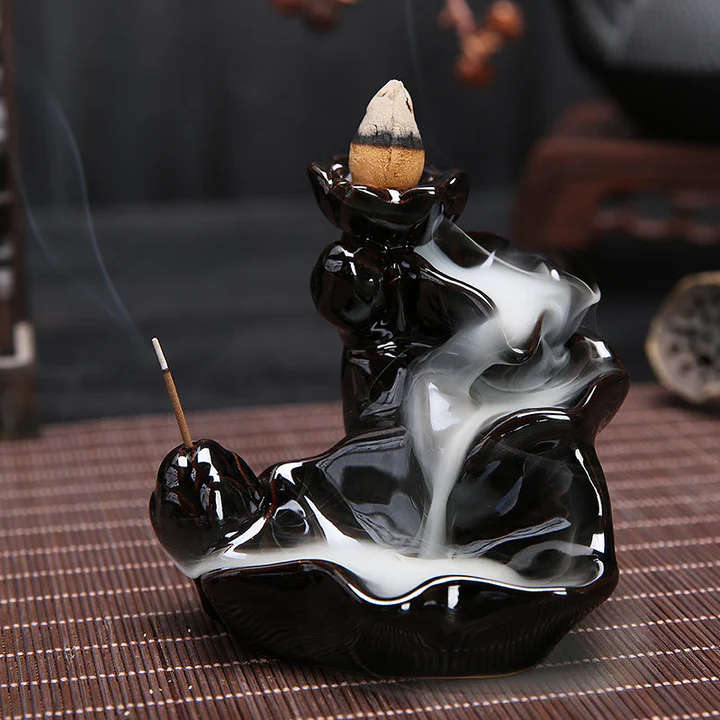
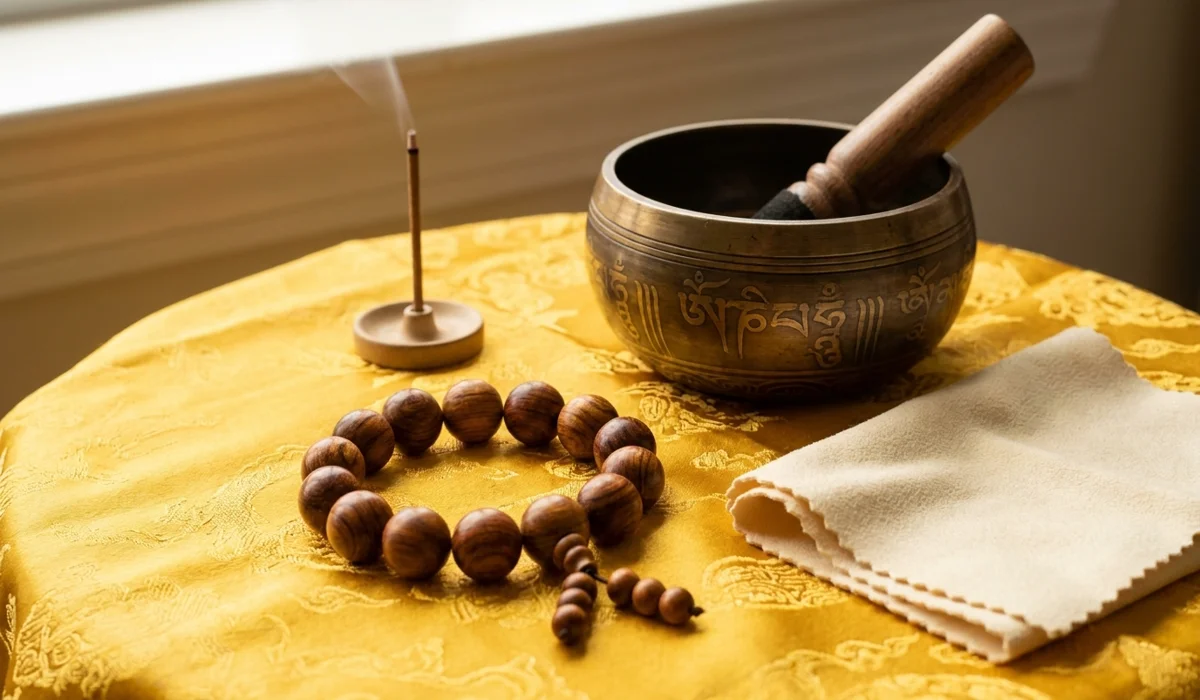
We recommend using gentle smoke from high-quality incense to clear any “heavy” energy from the beads. You should never submerge the wood in water, as moisture can cause the grain to swell and ruin the scent. Instead, use a soft silk or cotton cloth to buff the beads, which actually helps the natural oils rise to the surface and create a beautiful shine.
Charging the Wood’s Energy
To recharge the “Qi” (life force) of your beads, you can place them in indirect moonlight overnight. Some practitioners also use a sound bath with a Tibetan singing bowl. The vibrations from the bowl help “reset” the wood’s frequency, making it ready for your next deep focus session.
Frequently Asked Questions
Q: What makes Huanghuali wood special for meditation?
A: It has a rare mix of extreme density and a spiritually cooling aroma that helps the mind stay alert yet calm at the same time.
Q: How does the fragrance of Huanghuali help with focus?
A: The brain learns to associate the specific spicy scent with deep concentration, making it a “neuro-anchor” that helps you enter a meditative state faster.
Q: What are ghost face patterns and how do they aid clarity?
A: These are natural knots in the wood that look like eyes or faces; they give your eyes a natural, complex place to rest so you don’t get distracted by the room around you.
Q: On which hand should I wear my Huanghuali bracelet during practice?
A: Most people wear it on the left hand because it is the receiving side, allowing the wood’s grounding energy to flow into the body during practice.
Q: How do I properly cleanse and charge my Huanghuali beads?
A: You should buff them with a soft cloth and use light incense smoke for cleansing, then charge them under indirect moonlight to keep the wood’s energy fresh.
Integrating Huanghuali into your meditation routine is a beautiful way to honor ancient wisdom while improving your modern mental health. This wood provides the stability and sensory feedback needed to truly let go of the outside world. Whether you are using a mala or holding a raw piece of wood, the “Queen of Woods” will always be a loyal companion on your journey to inner peace.
This content is for informational and cultural exchange purposes only. It does not constitute medical, legal, financial, or other professional advice. Readers should consult with a qualified professional for any specific needs or health concerns.
Written by the Buddha Bodhis Team
Since 2020, we have been devoted to exploring traditional year-based wisdom, classical Feng Shui principles, and the rich spiritual symbolism rooted in Eastern cultural heritage. Our work bridges ancient metaphysical systems with modern life, interpreting annual cycles, elemental energies, and symbolic meanings to offer thoughtful insight and practical guidance. Through continuous research and practice, we aim to preserve traditional knowledge while making it accessible, relevant, and meaningful for contemporary seekers of balance, intention, and personal growth.
TikTok | YouTube | Pinterest | X
buddhabodhis@gmail.com